


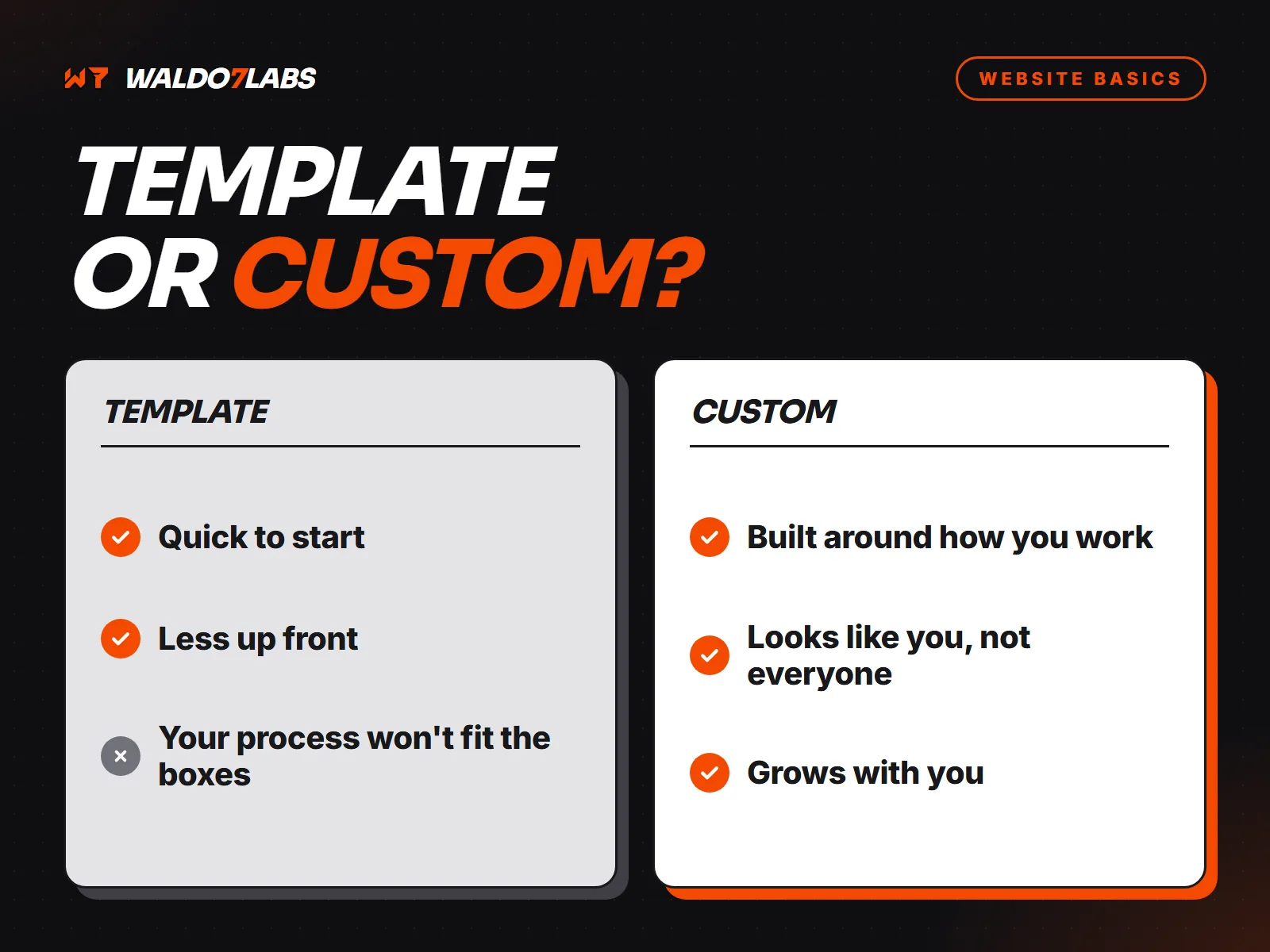
There are two ways to get a small business website. You can start from a template on a builder like Wix, Squarespace or a WordPress theme. Or you can have one built from a blank file around how your business works. Both are reasonable. The right choice depends on what the site has to do.
When a template is the right call
- You are just starting out and are not sure the business will stick.
- You need a simple site: what you do, where, and how to reach you.
- You enjoy doing it yourself and have the time.
- Your budget is very tight this year.
A clean template with real photos, a clear phone number and accurate information beats having no website. Do not let anyone talk you out of that.
Where templates start to pinch
Your process does not fit the boxes
Templates are built for the average business. If customers need to pick options, get a price or book a specific kind of job, you end up bolting on widgets that do not quite fit.
For example, the Smith Mine site lets a customer pick fill dirt, topsoil or gravel, type an address and get a delivered price on the spot. That is one screen of work for the customer, and it is not something a template gives you.
You look like everyone else
Popular themes are used by thousands of businesses. If three roofers in your county bought the same one, the customer comparing you sees the same layout three times.
Extra weight
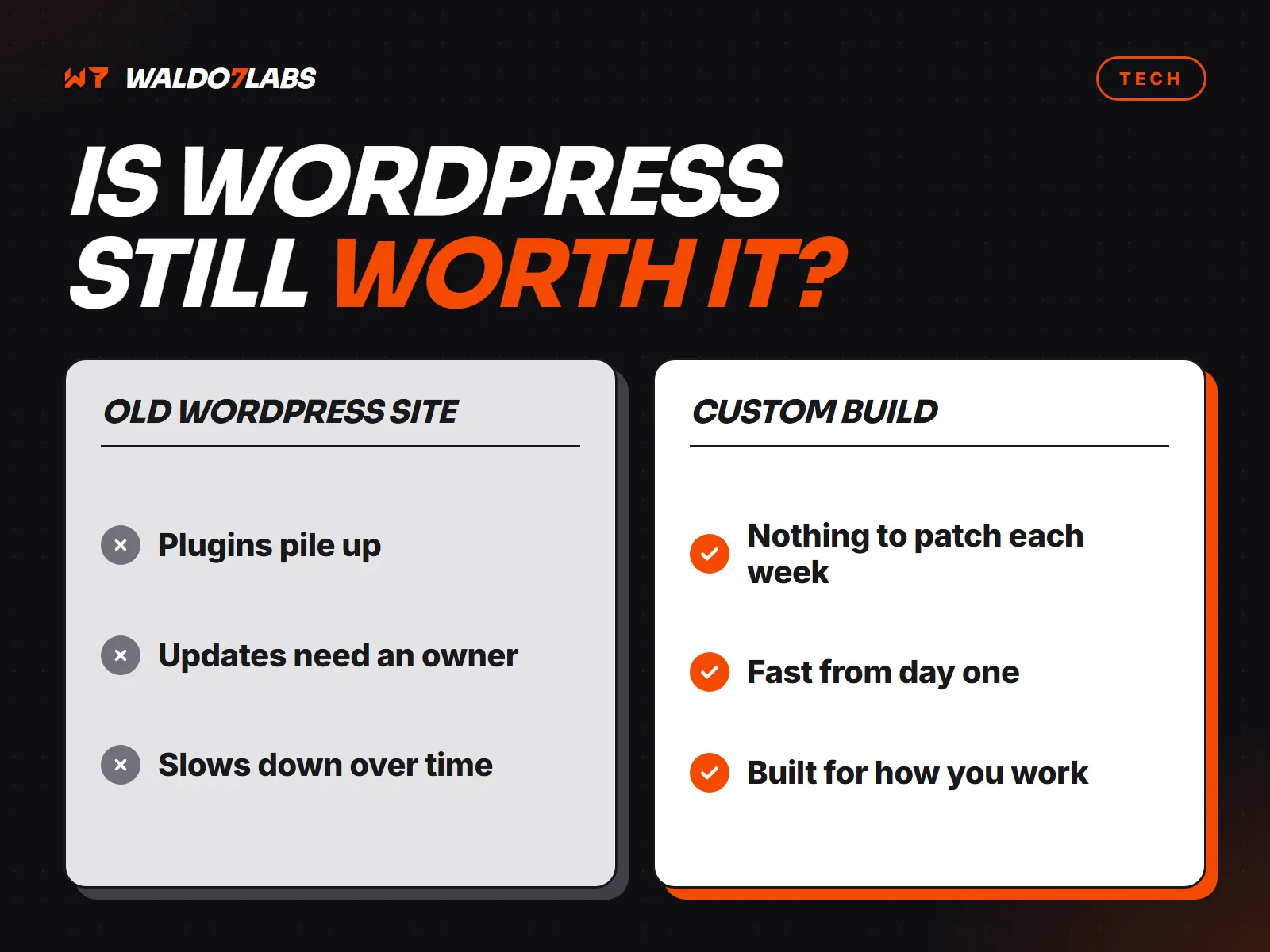
Templates carry code for features you never use, and builders add their own scripts on top. That weight slows pages down on phones, which is where most local customers find you.
Growing gets awkward
Adding a page for each service, a page for each town, a customer portal or a quote form is simple on a custom site and awkward on most templates.
What custom actually means
Custom does not have to mean huge or expensive. It means the pages, the layout and the features are decided by your business, not by a theme. A custom site can be five pages. The difference is that those five pages are built for the calls and jobs you want.
A few things that are simple to build custom and hard to fake with a template:
- A price or quote tool, like the delivered price calculator above.
- A live preview, like the light up letter builder on Marquee Moments.
- Private portals, like the family and faculty portals on the Creo Classical Academy site.
Questions that decide it
- What should a visitor be able to do on the site besides call?
- How many services and towns do you want to show up for?
- Who will keep it up to date, and how often does it change?
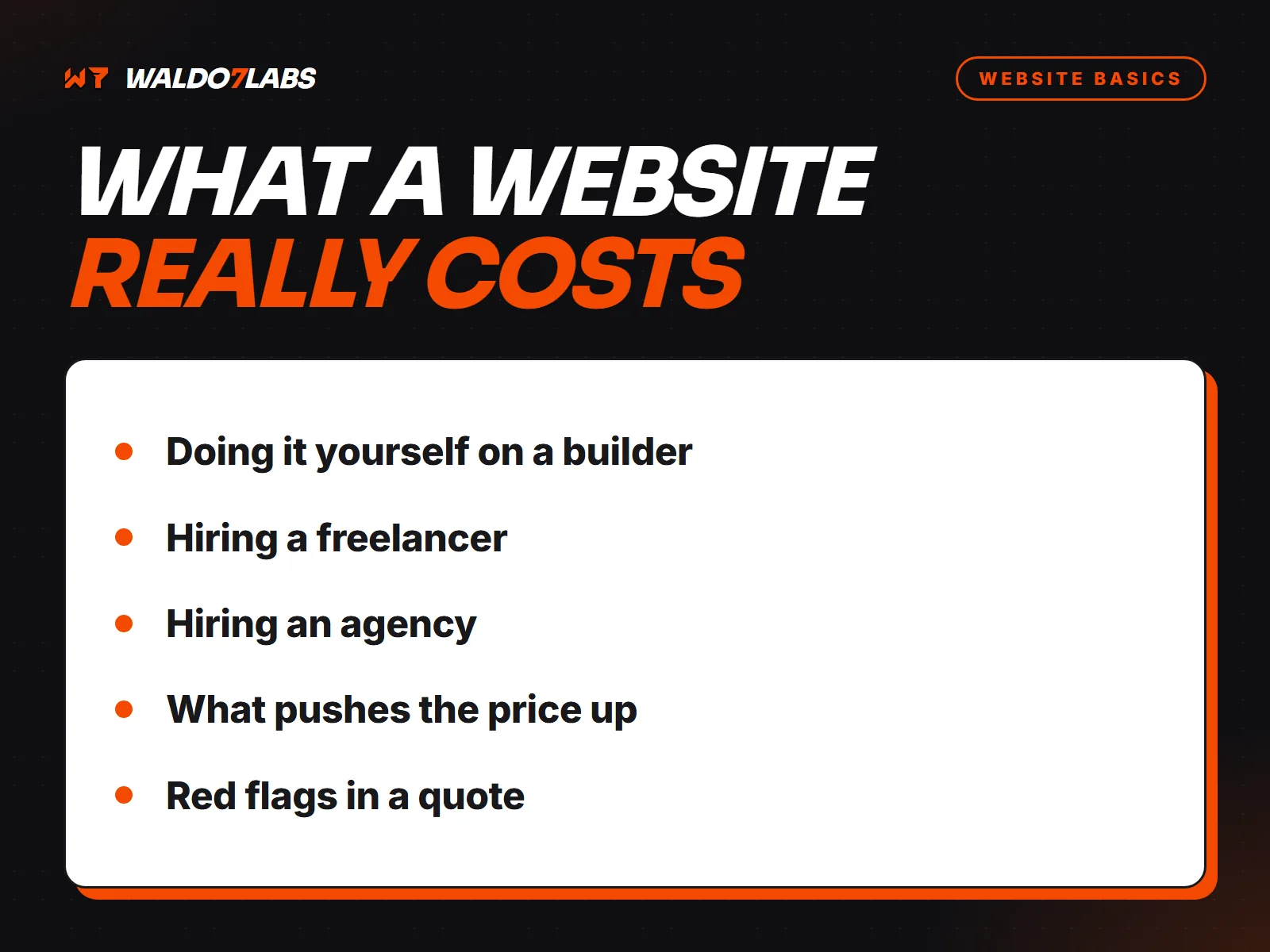
- What will it cost over three years, not just the first month?
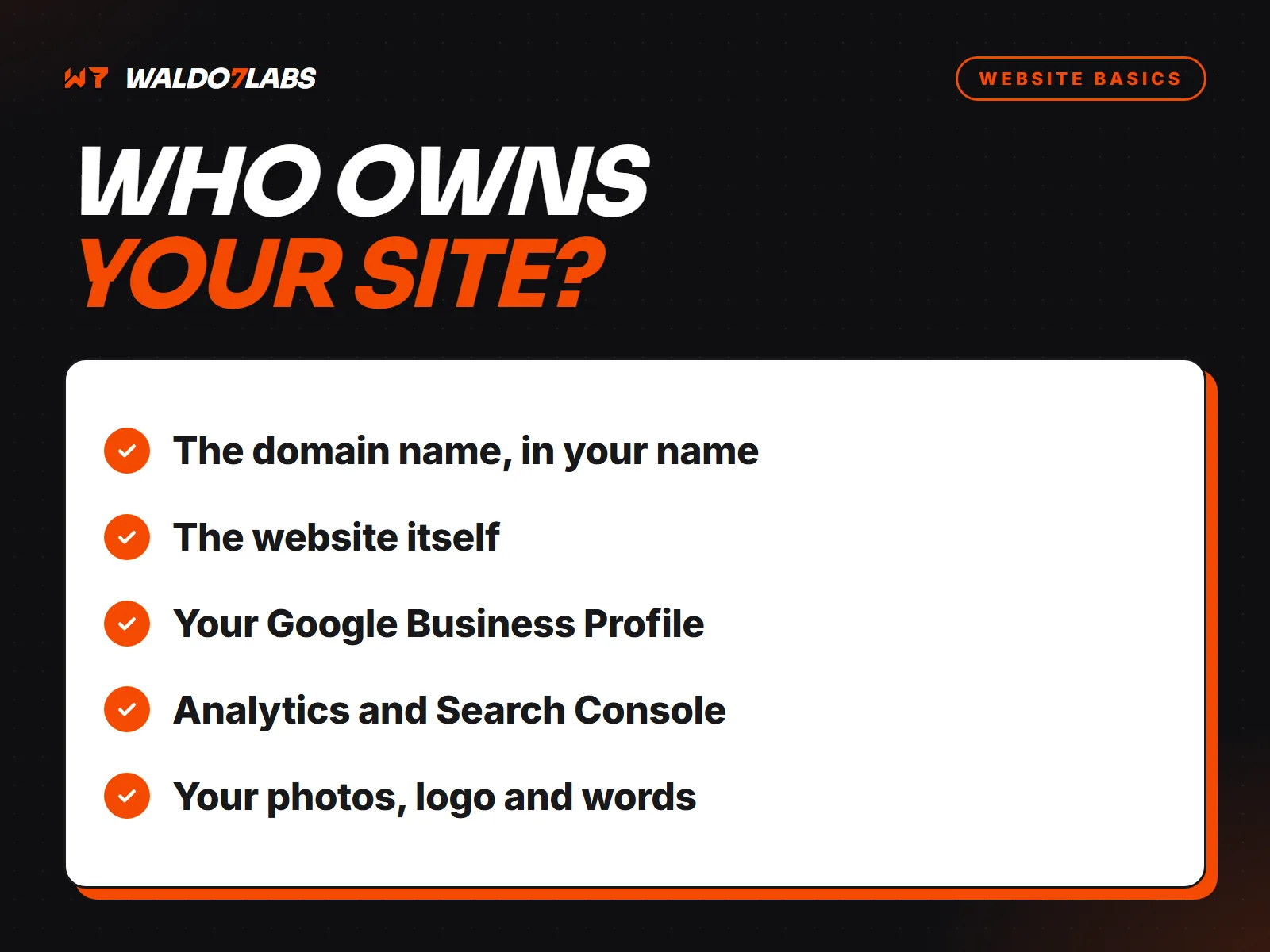
If your answers are "just call", "one or two", "me, rarely" and "not much", a template is fine. If the list is longer, a custom build is worth pricing out. Before you sign with anyone, read who owns your website.