


There is a contractor in every county who does better work than anyone else and stays about half as busy as he should be. It is not a skill problem or a pricing problem. He is slower to the phone than the guy down the road, and in service work that decides almost everything.
How people actually hire a contractor
A homeowner notices a problem. They search on their phone, tap the first two or three results, and contact all of them within a few minutes. Then they wait.
Whoever gets back first has a big advantage. Not because they are better, but because the homeowner is anxious and wants the problem handled. The first competent person to answer often gets the job, sometimes without a second quote.
By the time the third contractor calls back the next morning, the homeowner has booked someone and stopped thinking about it.
The window is minutes, not days
Studies of how fast businesses answer leads have found the same thing for years: the first few minutes matter most, and the odds of reaching the customer drop quickly after that. After a day, you are calling someone who already hired your competitor.
Most contractors return calls in the evening, after the work is done. That is eight or ten hours late, and it explains a lot of quiet phones.
Why good contractors are slow
Not laziness. The nature of the work.
You are under a house, on a roof, in an attic or a crawlspace with both hands busy. You cannot answer. Then you are driving to the next job. Then it is six o'clock, you have nine missed calls, and no idea which were customers.
The work that pays today keeps you from catching the work that pays next week. That is the trap, and trying harder does not fix it.
Four fixes, cheapest first
1. Missed call text back
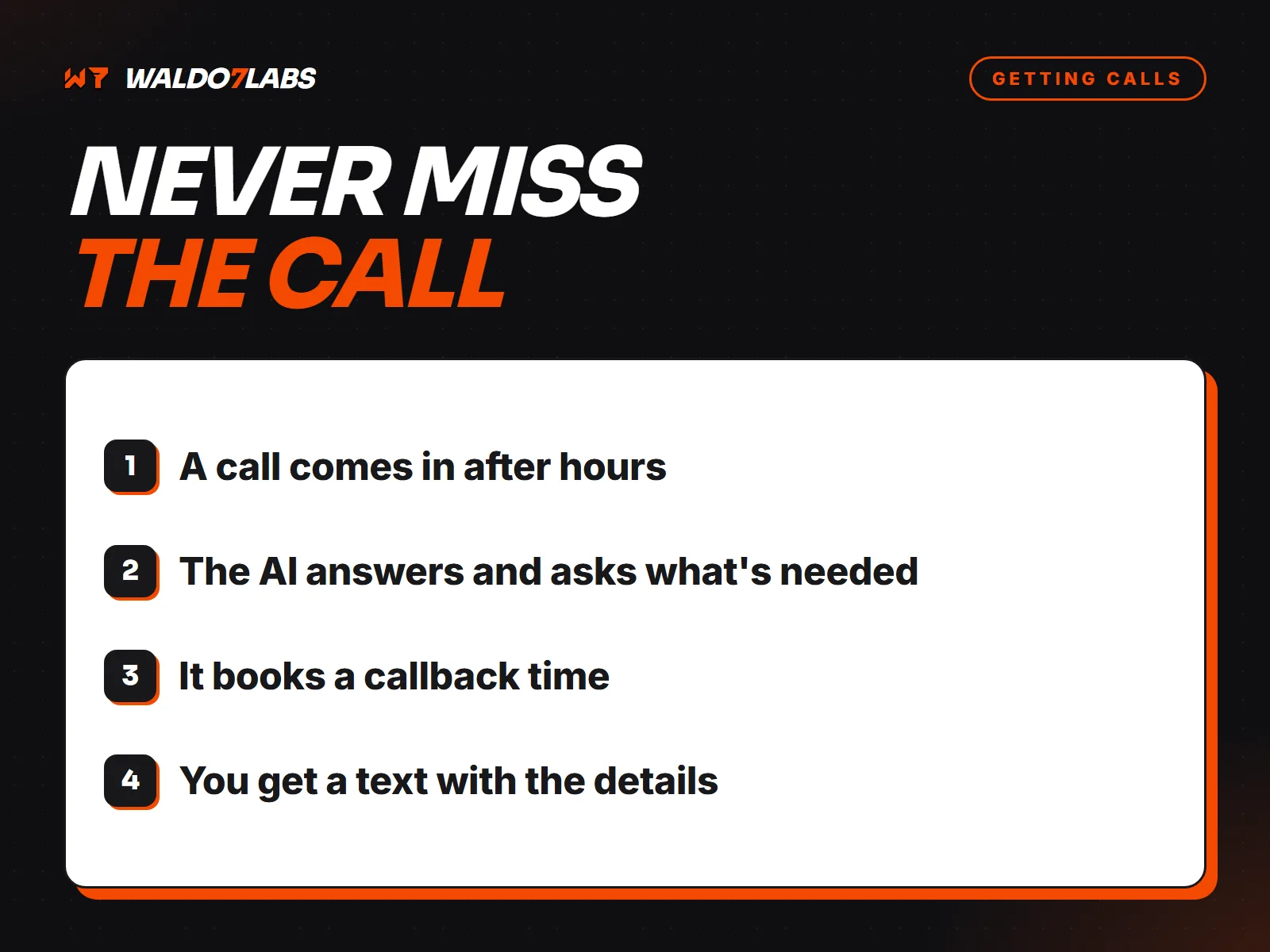
The best return for the least money. When a call comes in and you do not pick up, a text goes out within seconds: "Sorry I missed you, I am on a job. What do you need done and where? I will call the second I am free."
The caller now knows you are real, that you are working, and that you will call back. Most will wait instead of dialing the next number. It turns a missed call into a lead.
2. Form alerts by text
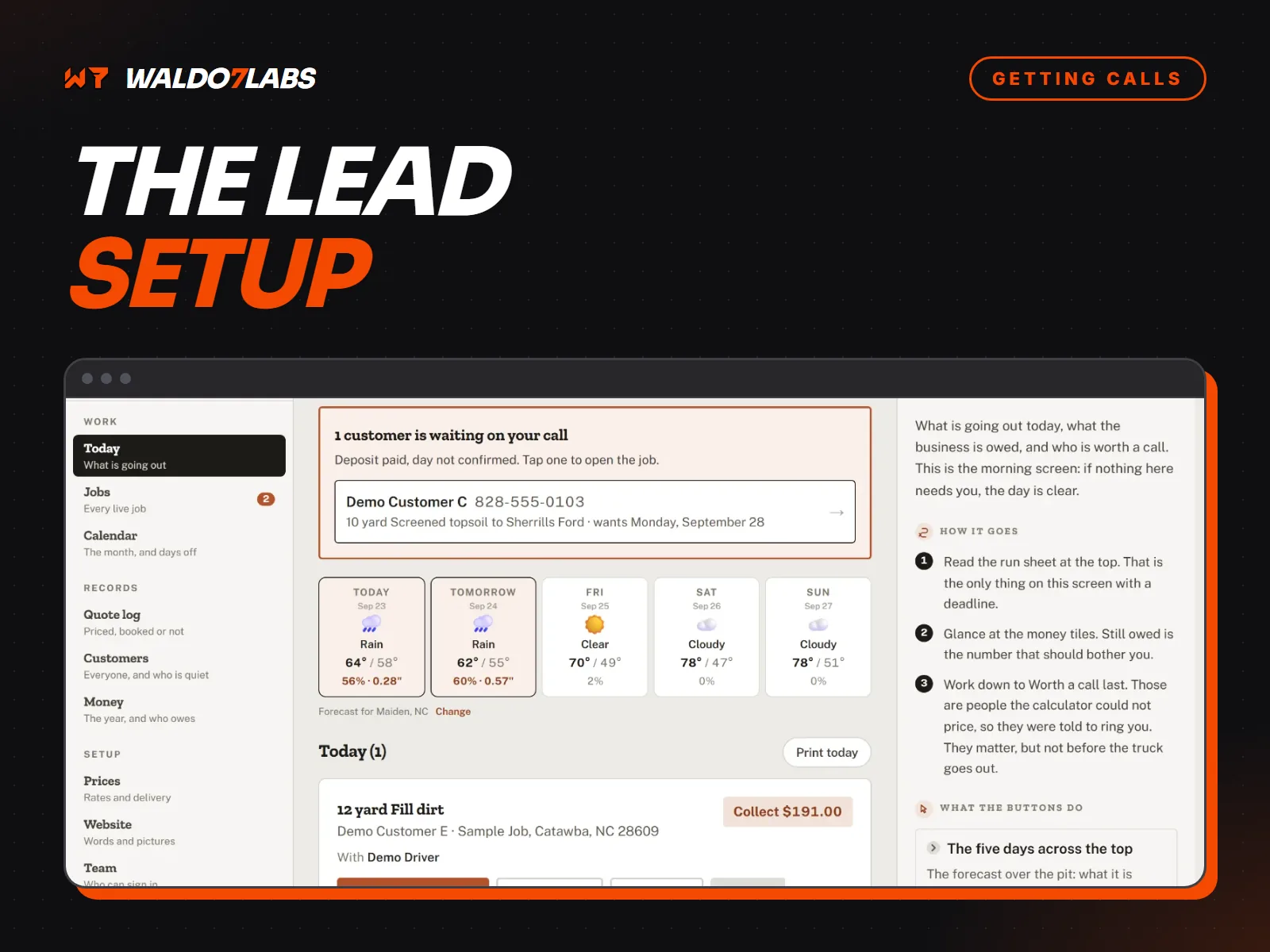
If your website form sends to an email you check at night, it is not a lead system. Have submissions arrive on your phone as a text with the name, number and job, so you can call straight from the notification between jobs.
3. A booking link for jobs that do not need a quote
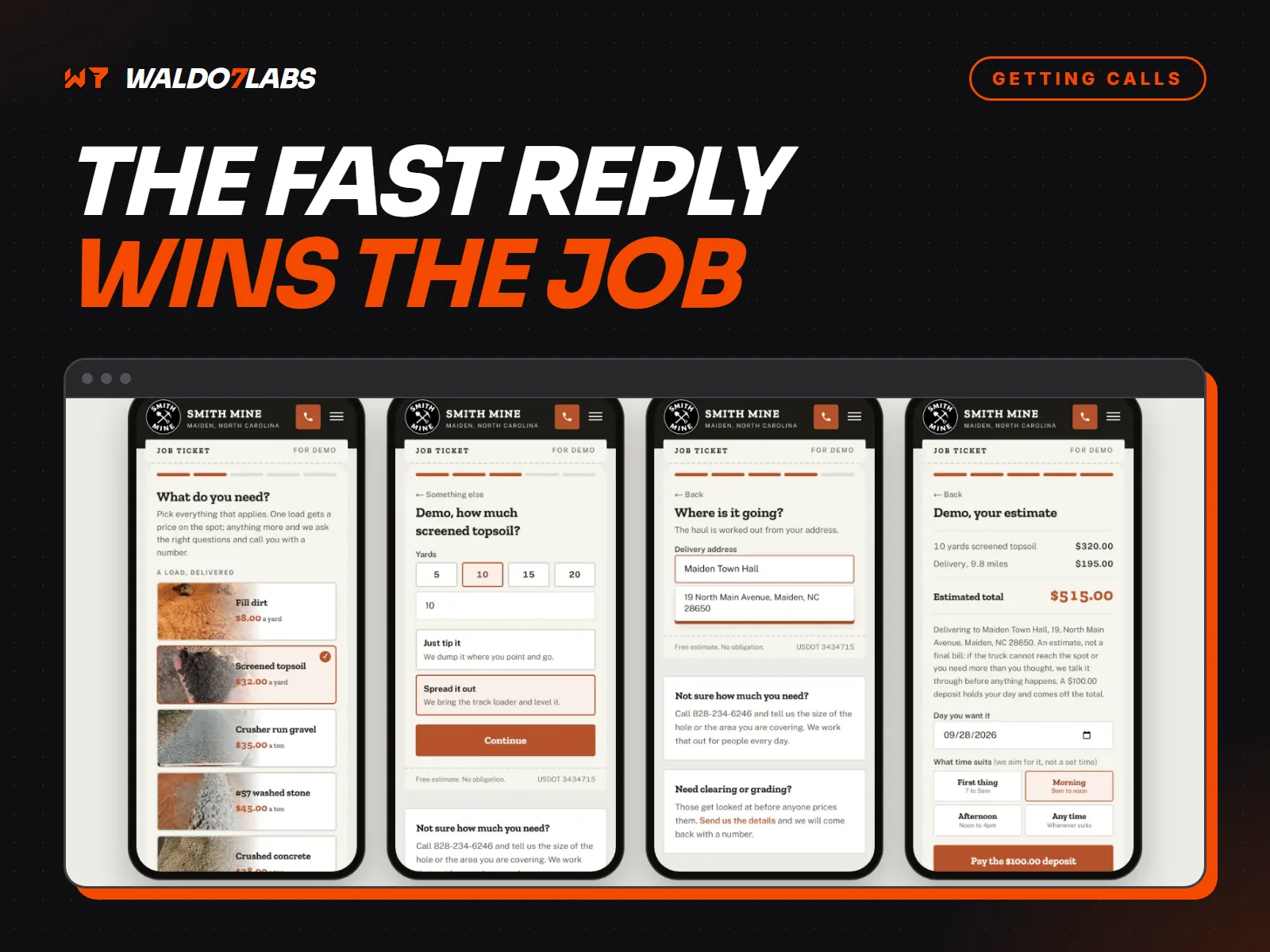
Service calls, inspections, estimates, tune ups. Anything with a predictable length can be booked directly. Every job booked without a phone call is time back.
4. An AI receptionist for high call volume
If you miss several calls a day, a voice assistant can answer, ask what the problem is, take the address and put it on your calendar. It is not right for everyone. AI phone receptionists for contractors covers when it pays off.
Do the math on your own numbers
Take your average job value and multiply it by the calls you miss in a week. Even at a low close rate, the number is usually uncomfortable.
Here is an example. A contractor with a 600 dollar average job misses five calls a week and would have closed a third of them. That is about a thousand dollars a week left on the table, or more than fifty thousand a year, from calls that already reached the phone.
You may not need more leads. You may need to stop dropping the ones arriving now.
The part nobody wants to hear
Craftsmanship does not market itself. A homeowner cannot judge your work before hiring you. They have no way to know your copper runs are neater than the other guy's.
What they can judge is how quickly you answered, whether you sounded like you wanted the job, and whether the process felt easy. Those are the only signals they have at the moment they decide.
This is not an argument for doing worse work. It is an argument for making your response match your workmanship.
Start here
Turn on missed call text back this week. Send your form to your phone. Those two changes take a couple of hours and will likely do more for your income than a new logo or another few hundred a month in ads.