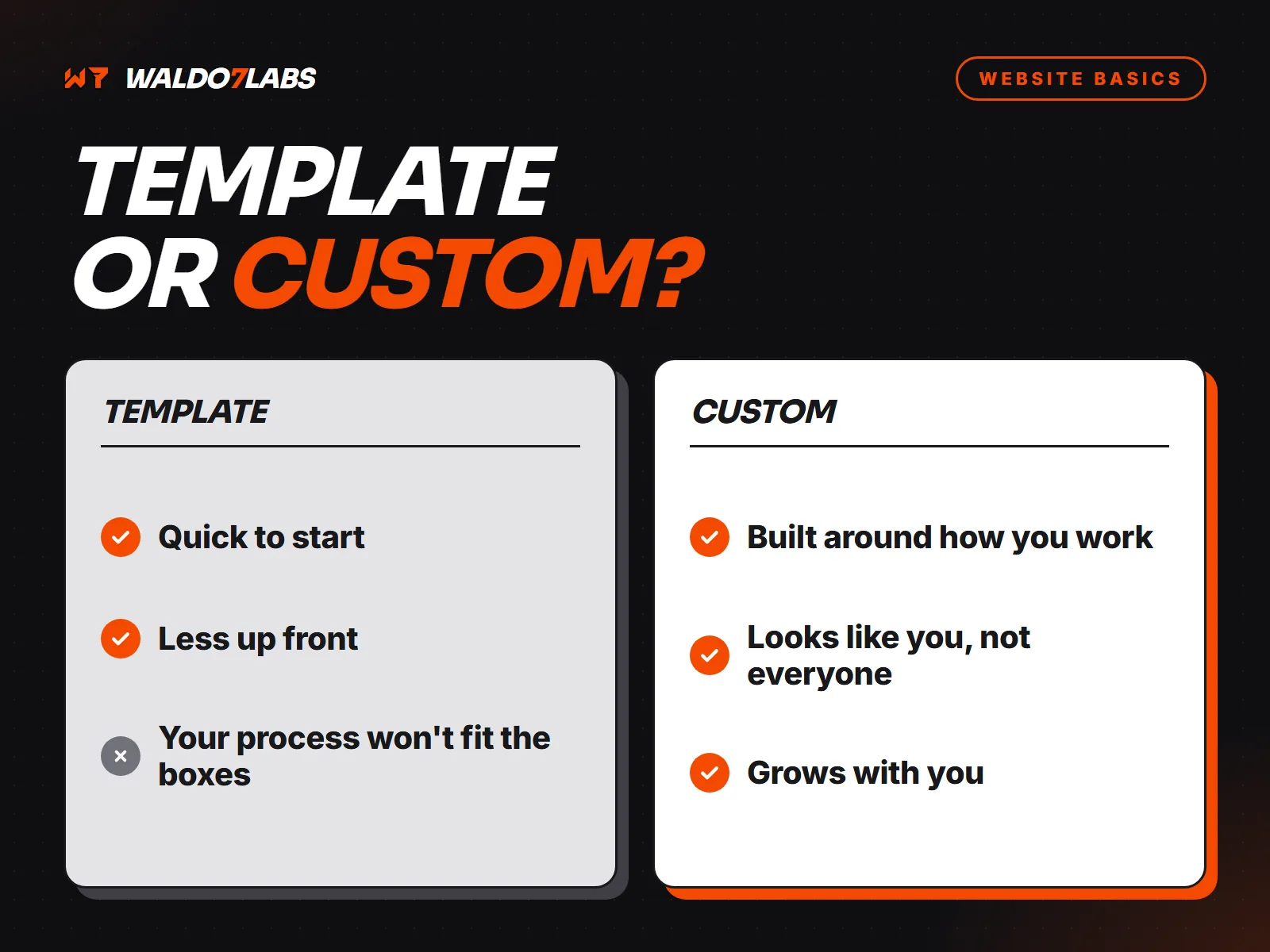



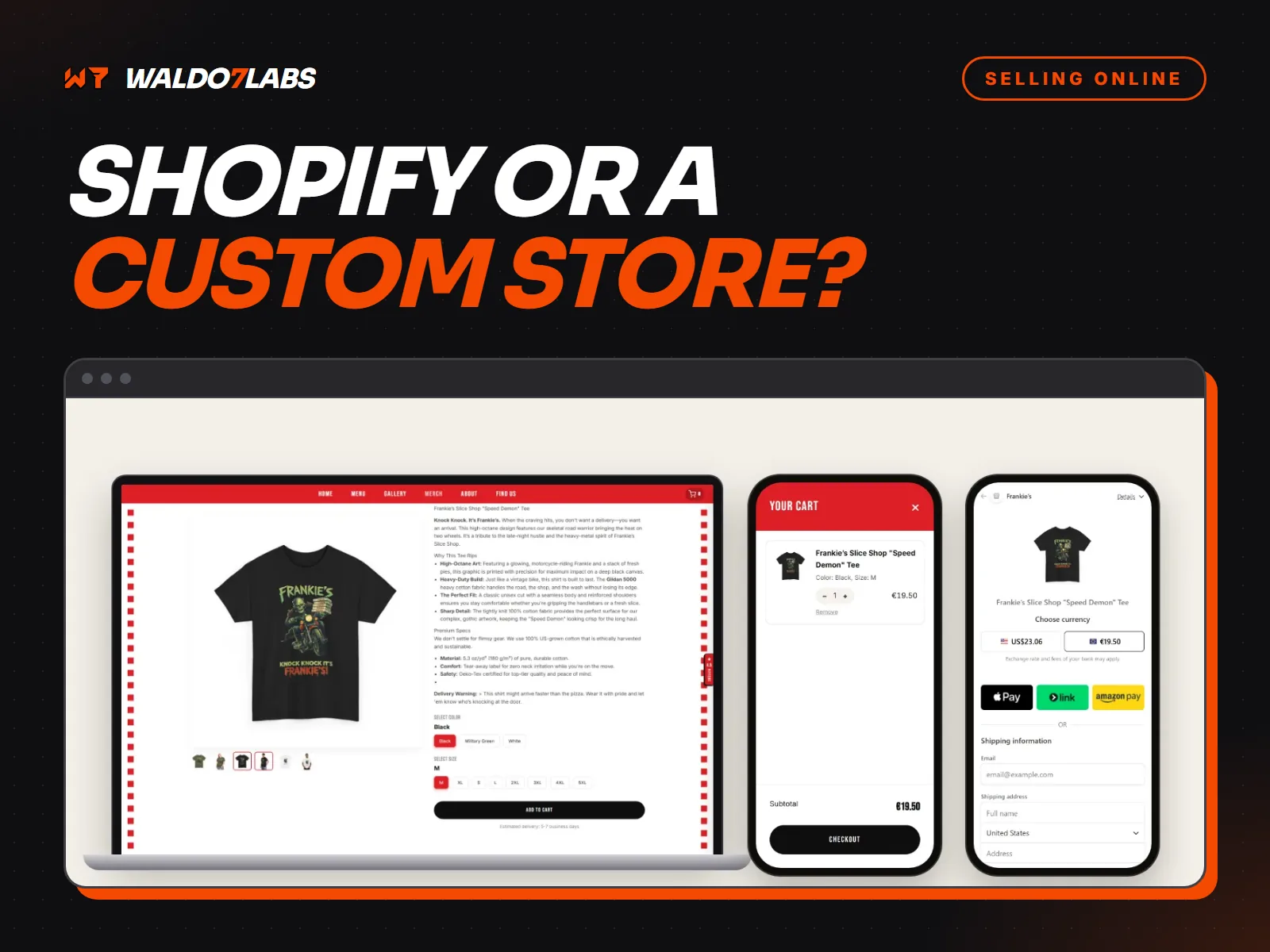
If you want to sell online, the first question is usually Shopify or something custom. For most stores, the answer is Shopify. Here is why, and the cases where it is not.
When Shopify is the right choice
- You sell physical products with normal shipping.
- You have more than a handful of products, with sizes, colors or stock to track.
- You want to be selling in weeks, not months.
- You want a checkout people already recognize and trust.
Shopify handles payments, taxes, inventory, shipping labels and order emails out of the box. That is a lot of work you do not want to pay someone to rebuild.
What Shopify costs over time
You pay a monthly plan, plus payment fees, plus apps. Apps are where costs creep. Reviews, subscriptions, upsells, bundles and wholesale pricing are often separate monthly fees. Add them up before you commit, and check again after a year.
When custom makes more sense
You sell something that needs a quote
Some products do not have one price. Delivered materials, custom signs, made to order work. A custom site can work out the price from the customer's choices. The Smith Mine site does this for fill dirt and gravel: pick the material, enter the address, see the delivered price.
You only sell a few things
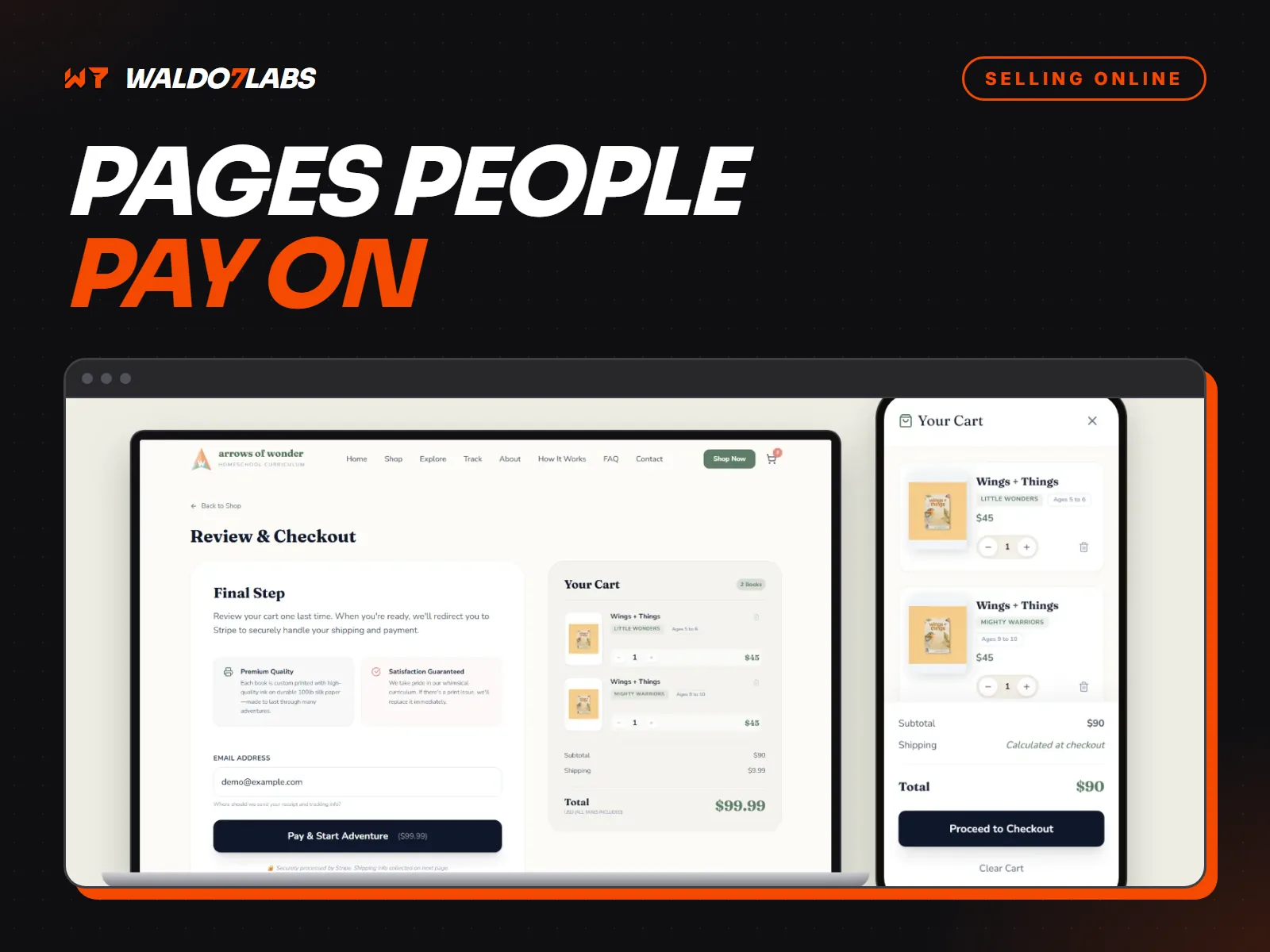
A business with three products or one kind of booking often does not need a full store. A custom page with a simple, secure payment step can be faster and cheaper to run. See taking payments on your website.
The store is part of a bigger site
If selling is one feature of a service business, a restaurant or a school, bolting Shopify onto it can feel like two different websites. Custom keeps it all in one place.
The middle option: headless
You can keep Shopify for the back end and build a custom front end on top of it. Shopify still handles products, checkout and orders. The shopping pages are built to look and work exactly how you want.
This is the best of both for some stores, but it costs more to build and needs a developer for changes. It is usually worth it only when design or speed is holding back real sales.
How to choose
- Count your products and how often they change.
- Decide whether prices are fixed or calculated per order.
- Add up the full monthly cost of Shopify with the apps you would need.
- Decide who will manage orders and products day to day.
The e-commerce page covers what I build for online stores. If Shopify on its own is the better fit for you, I will say so.