


Years ago, ranking meant repeating a phrase like "roofer Charlotte NC" as many times as you could get away with. Google stopped rewarding that a long time ago. It now tries to understand what a page means and whether it answers what the searcher wanted.
For a small business, that is good news. You do not need tricks. You need pages that answer real questions well.
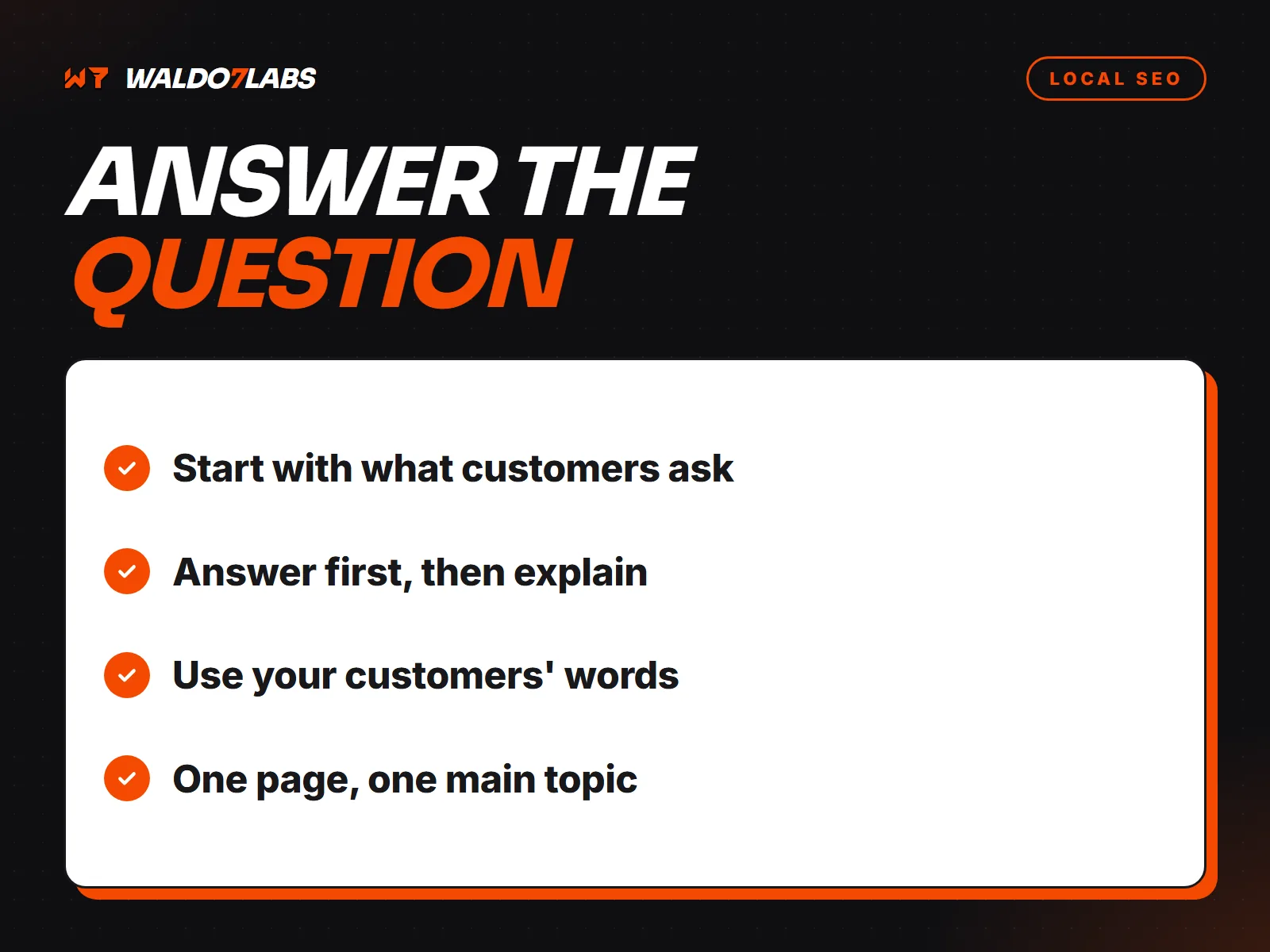
Start with the questions customers ask
Write down what people ask you on the phone. How much does it cost? How long does it take? Do I need a permit? Can you come out this week? Those questions are your content plan. Each one can become a section on a service page or its own post.
Answer first, then explain
Put the answer in the first sentence or two. Then add the detail, the exceptions and the examples. Someone who only reads the top still gets what they came for, and search results and AI answers often pull that first clear answer.
Weak: three paragraphs of company history before getting to the point. Strong: "Most water heater swaps take a few hours. Here is what changes that."
Use your customers' words
You might say "HVAC system replacement". Your customer types "new AC unit cost". Write for them. Use trade terms where they help, and explain them when you do.
One page, one main topic
A page that tries to cover eleven services ranks for none of them. Give each main service its own page, and each big question its own section or post. Then link them together, so someone reading about water heater replacement can reach "tankless or tank?" in one click. Those links also show Google how your topics connect.
Cover the next question
Think about what comes after the first question. Someone reading about roof replacement will want to know about cost, timing, insurance claims and what happens to their yard. A page that answers the follow ups keeps them reading and gives them fewer reasons to go back to Google.
Show a real person wrote it
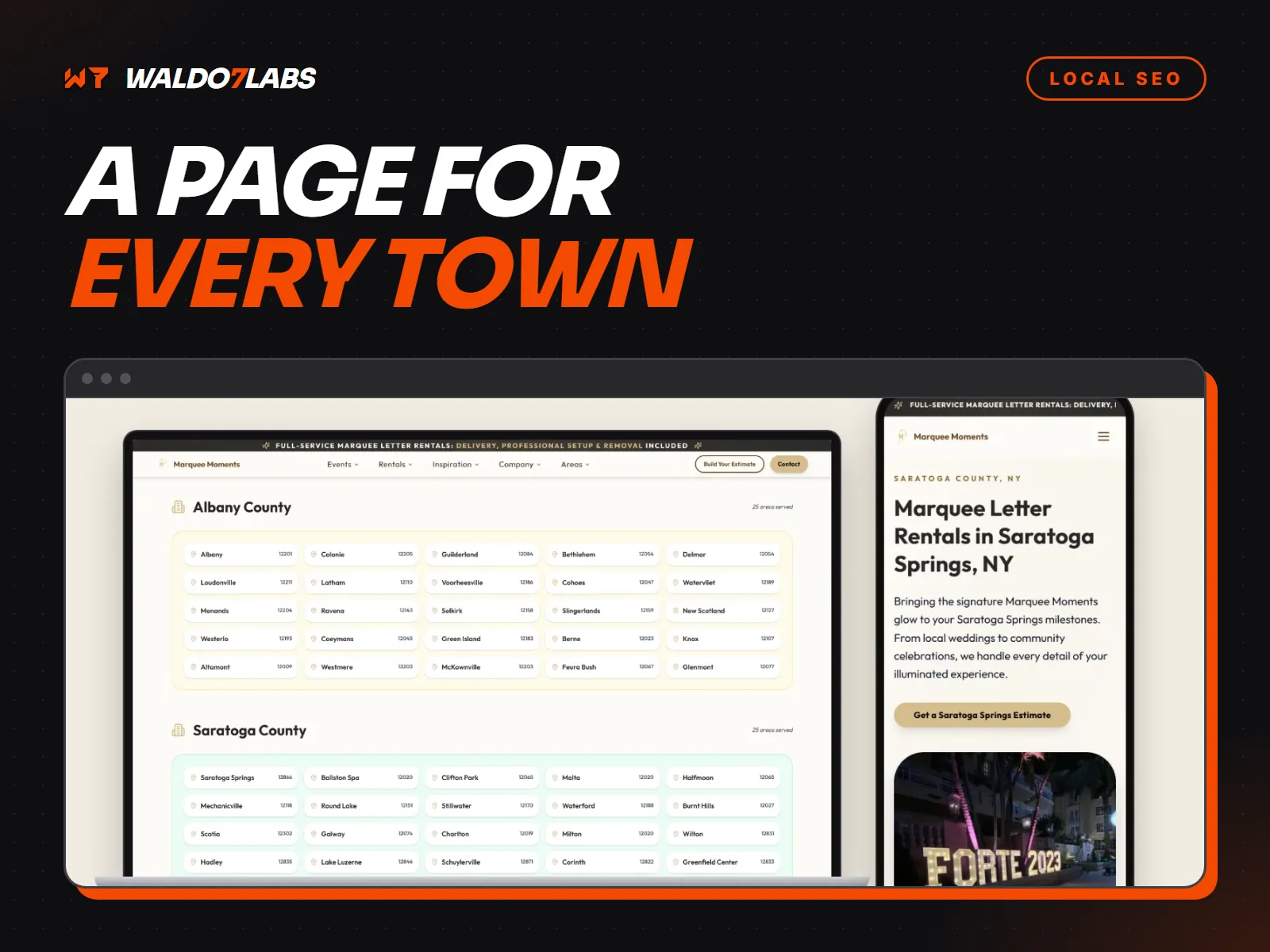
Google says it looks for experience and trust. For a local business that means real things: the owner's name, real photos of real jobs, the towns you have worked in, licenses, and reviews from real customers. None of this can be faked well, which is exactly why it counts.
Keep it current
Prices, rules and methods change. A post from three years ago with old numbers makes the whole site look abandoned. Review your main pages once or twice a year, fix what changed, and update the date when you do.
For the local side of this, with service pages, town pages and schema, read local SEO for your website. For how AI tools use the same pages, see how AI assistants pick local businesses.