


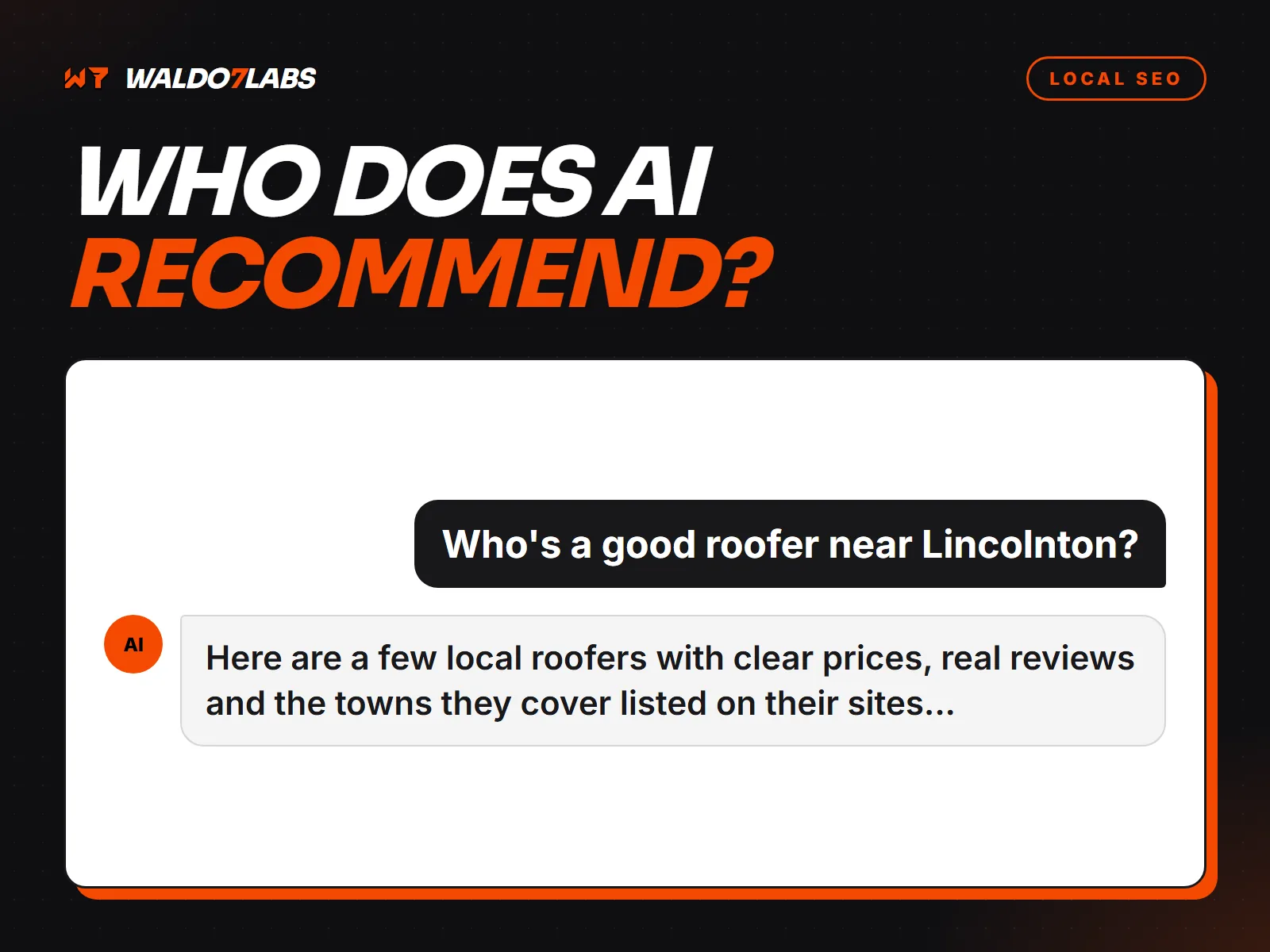
More people now ask ChatGPT, Gemini or Google's AI answers things like "who is a good roofer near Denver, NC?" instead of scrolling a list of links. The AI gives a short answer and names a few businesses. If you are one of them, you get the call.
Nobody outside those companies knows exactly how they choose. Anyone who promises to get you "ranked in ChatGPT" is guessing. But these tools do show where they get their information, and that points to a few things any local business can do.
Where the answers come from
AI assistants lean on the same public information a careful customer would check: your website, your Google Business Profile, reviews, directories like Yelp and the BBB, and mentions on local sites. When they search the web live, they read pages much like a search engine does.
So the goal is simple. Make the facts about your business easy to find, easy to read, and the same everywhere.
Put plain facts on your website
An AI cannot recommend you for metal roofs in Stanley if your site never says you do metal roofs or work in Stanley. Write it down in normal sentences:
- What you do, service by service.
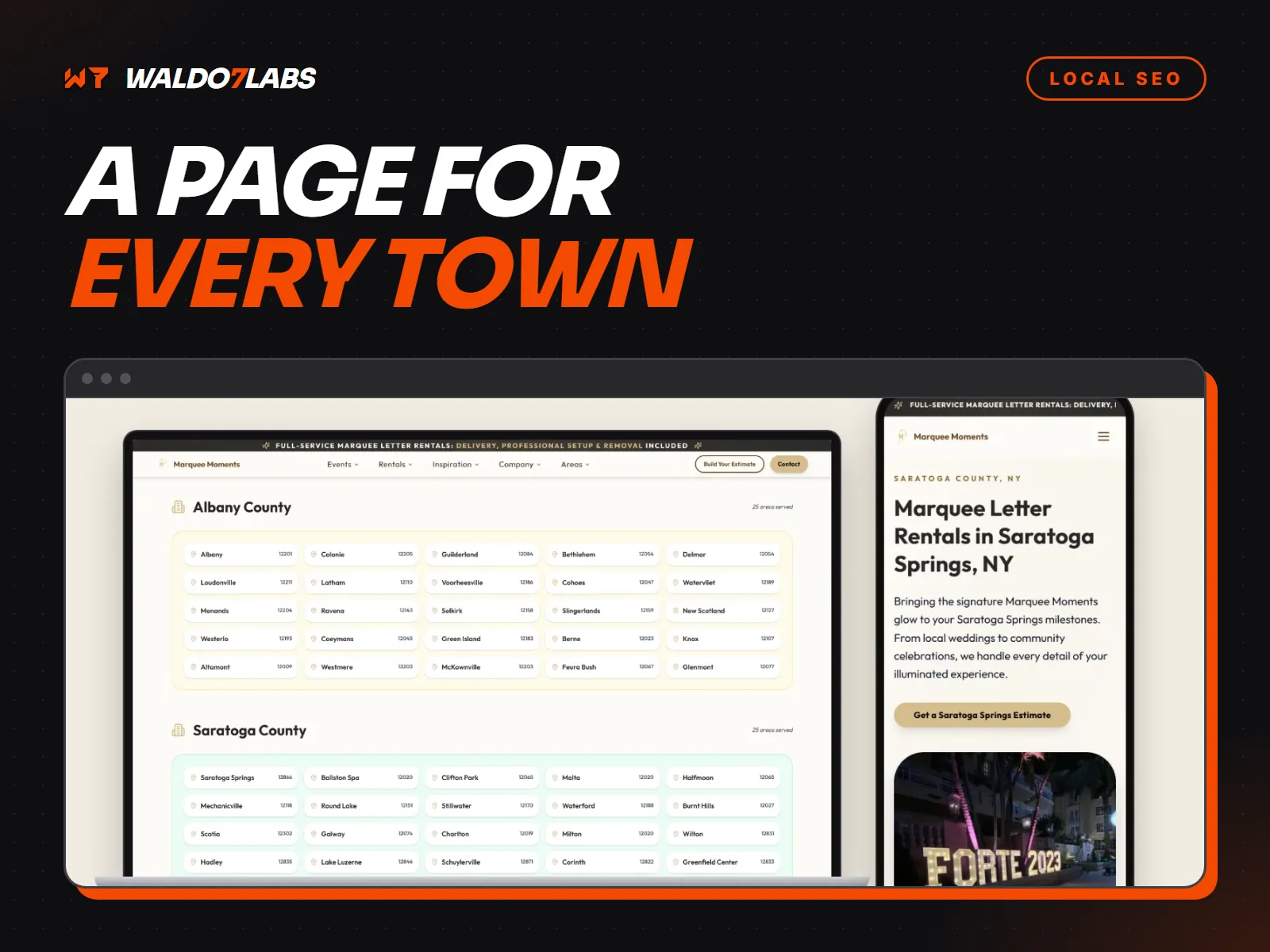
- The towns and counties you work in.
- Your hours, and whether you take emergency calls.
- How pricing works, even if it is just "free estimates, priced per job".
- Licenses, insurance, and how long you have been in business.
Slogans do not help here. "Quality you can trust" gives an AI nothing to repeat.
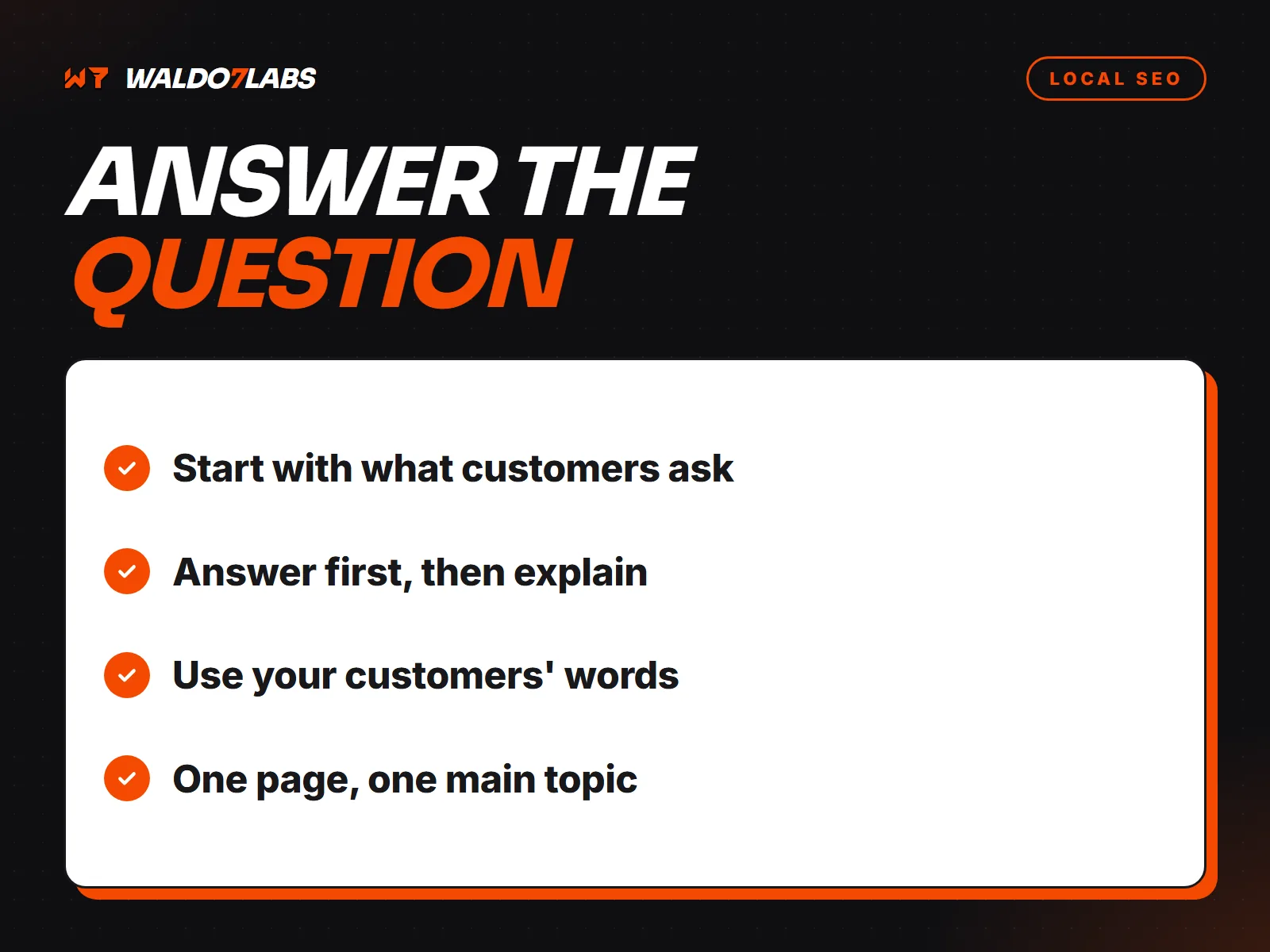
Answer the questions people actually ask
A short FAQ with real customer questions works well, because people ask AI tools in the same full sentences. "Do you replace water heaters the same day?" "Do you charge for estimates?" Answer each one in the first sentence, then add detail. There is more on writing this way in SEO beyond keywords.
Keep your details the same everywhere
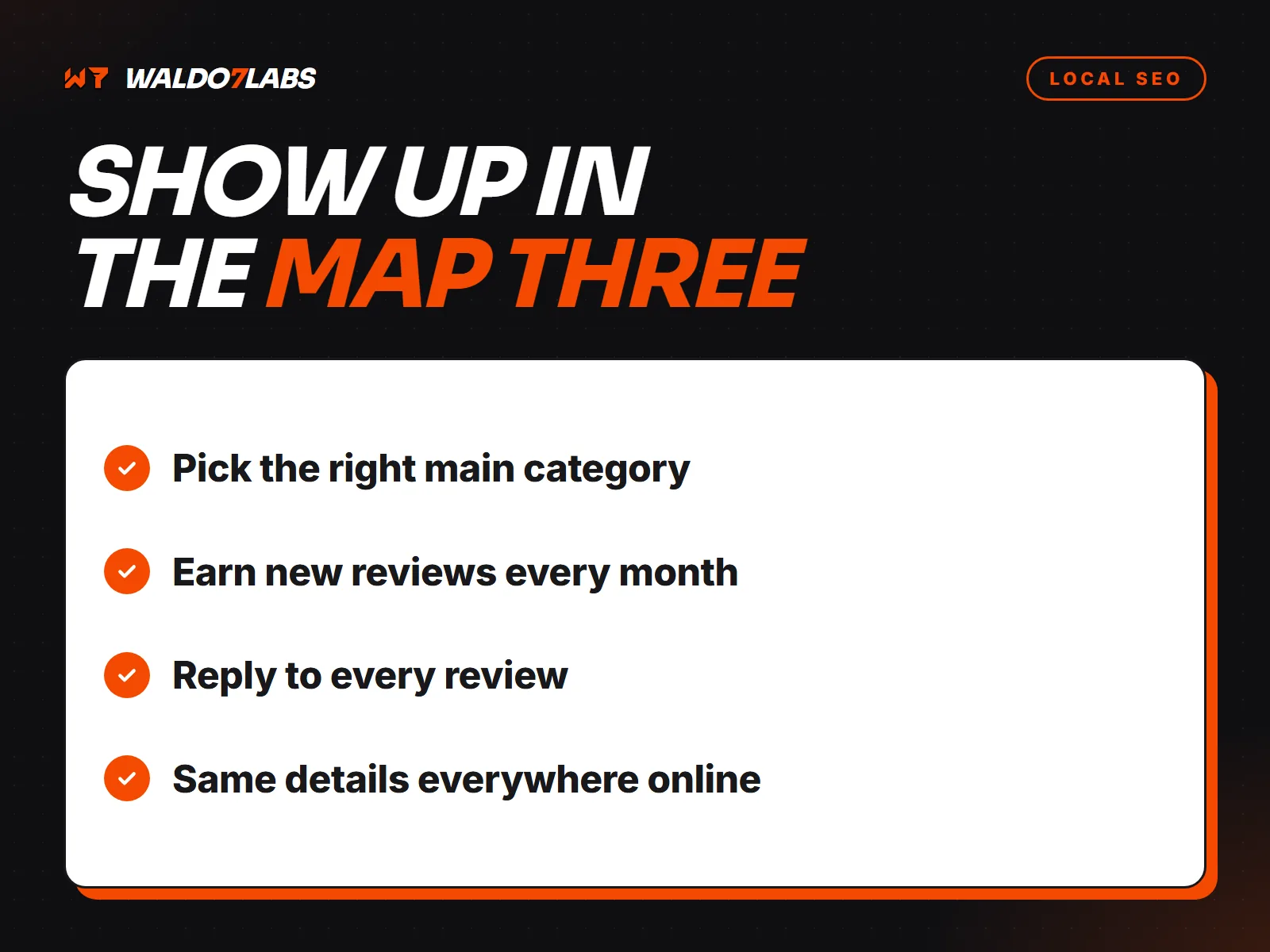
If your website shows one phone number, Google shows another and Yelp still has your old address, anything reading all three has to guess. Pick one version of your name, address, phone and hours, and fix every listing to match.
Do not block the readers by accident
Some hosting and security settings block AI crawlers by default. That can be fine if you want it, but many owners do not know it is switched on. Check your robots.txt file and your firewall or CDN settings, and decide on purpose whether AI search tools can read your site.
Reviews that say something
A review that says "Great job!" helps a little. One that says "They replaced our water heater in Lincolnton the same afternoon" tells both people and machines what you did and where. You cannot write reviews for customers, but you can ask them to mention what the job was.
Structured data for the basics
Schema markup is a block of code that states your business type, address, hours and services in a format software reads without guessing. It is not magic, but it removes doubt. I add it to every site I build, and it is covered in local SEO for your website.